Vivisari Vexaria
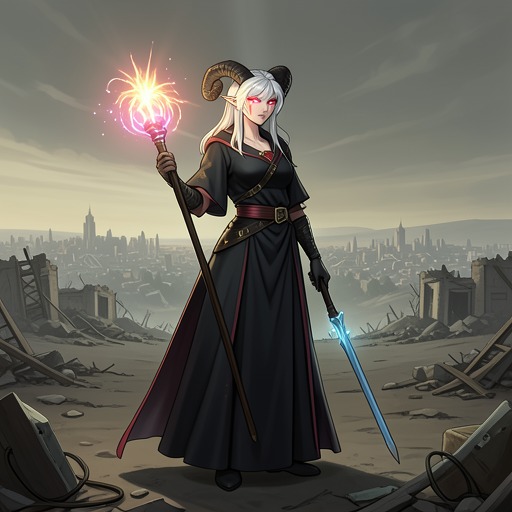
New Life as a Max Level ArchmageVivisari Vexaria is the lost Sorceress of the Party of Heroes and the decisive magical force behind its victory over the Seven Cataclysms. Once a player who had repeatedly experienced the final battle of Seven Cataclysms, she awakens in the world of that game as the very figure its inhabitants worship: a level 2109 demon archmage, titled the Usurper of the Ashen Throne. Her return is therefore not merely a change of location or identity. It is a collision between private memory and public legend, between the bored outsider who knows the world as a game and the near-mythical mage whose name has shaped its history for a century.
Identity and Legendary Past
Vivisari’s first conscious experience in the new world is the Burial Room of the Ashen Hierophant, the arena where she had run the final boss fight at least a thousand times. The setting is no longer an abstract game environment: the obsidian throne, enclosing spires, bubbling lava, and heat against her face have become physically vivid. When she calls up her Status screen, it identifies her as Vivisari Vexaria, the Usurper of the Ashen Throne, a Vanguard member, and a level 2109 Demon [Archmage]. The screen gives her an overwhelming numerical profile, including strength of 162,196 and agility of 102,342, establishing that the body she has inherited is not merely powerful by ordinary standards but situated at the extreme upper edge of the world’s known magical hierarchy.
The scale of that identity is revealed gradually through the reactions of others. In Prismarche, five statues commemorate the Party of Heroes, and Vivisari recognizes every figure as one of her former regular party members and online friends. The bronze plaque gives the group its historical name, while the statue representing Vivisari is so inaccurate that she can view it with bemused detachment. The city’s Temple displays the heroes in stained glass among saints and other revered figures, converting the party’s adventure into a religious and civic memory. A priest explains that Vivisari was the Sorceress, the supreme talent of magekind, the adventurer who conquered the Seven Cataclysms.
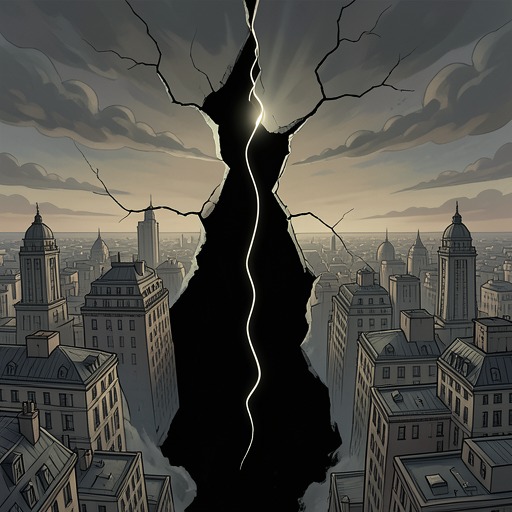
The priest’s account also supplies the central historical cost of her achievement. A hundred years earlier, the Party of Heroes defeated the seventh and final Cataclysm, but all of its members except the Sorceress perished in the fight. The Peace Day Festival is being prepared for the centennial of that victory. Vivisari consequently returns to a society that considers her companions dead, venerates her as the lone surviving hero, and interprets her absence through the language of legend rather than personal knowledge.
Return to a Changed World
Vivisari’s private response to the century she has missed is sharply different from the public response to her. She is not especially devastated by the loss of her former life, because she had been antisocial, her parents were not around, and she had left behind no close relationships beyond online friends. Even so, she expects to miss those friends, and the realization that a full century has passed remains difficult to absorb. The altered city and its technological advancement make the passage of time concrete, while the memorial statues and temple imagery force her to confront the fact that her personal identity has become historical property.
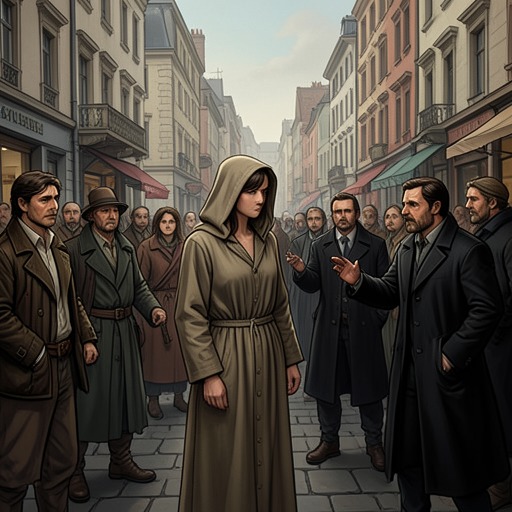
She initially attempts to preserve distance from that history. After registering with the Adventurer’s Guild, she takes the name Vivienne rather than Vivi, using the altered name as a practical separation from Vivisari Vexaria. She receives a gold-rank adventurer card and a badge marked with the staff symbol of a generalist mage. The disguise is modest and temporary, but it shows that her first instinct is not to claim the reverence attached to the Sorceress. She wants to explore the world without immediately becoming the object of its expectations.
That separation becomes increasingly difficult during the Peace Day celebrations. Prismarche’s citizens celebrate a hundred years free from the Cataclysms, although the younger generation has not personally witnessed the horrors their predecessors survived. Vivisari remembers the game’s depictions of the Rampant Genesis caused by the Flesh-Weaver, the Crimson Blight brought by the Reaper of the Lost Harvest, and the Great Conflagrations called down by the Ashen Hierophant. The festival’s joy is therefore shadowed by her knowledge of the violence behind the public holiday. The Party of Heroes is revered because it saved the world from terrors that the current generation knows chiefly through commemoration.
Magic, Responsibility, and Action
Vivisari’s magical ability is not limited to the spells that carried over from Seven Cataclysms. While the festival’s ordinary explosions and lights seem inadequate to the occasion, she decides to create a spectacle of her own. In a secluded alley, she searches the memories of her new body and finds the accumulated knowledge of the world’s preeminent sorcerer. She understands that Vivisari was not a god, but was as close as a mortal could come through magic. Drawing on that knowledge, she constructs the arcane circle for Grand Fireworks, combining elemental and illusory branches so that the display can achieve immense scale without causing the real harm that purely elemental magic might inflict.
Her power is accompanied by an uncomfortable awareness of responsibility. During the Convoy crisis, Saffra risks herself while protected by Vivisari’s spells, and those protections are precisely what make the dangerous action possible. Vivisari recognizes that Saffra’s decision was necessary: the aether cannons were crucial to the defense, and many people would have died without them. She also recognizes that the incident exposes a troubling trait in her apprentice, who is willing to risk her life readily. Rather than treating the matter as a simple failure of discipline, Vivisari sees the deeper problem and concludes that Saffra will be difficult to guide.
Her response combines reprimand with material care. When Saffra is shocked to receive a second potion identical to the first, Vivisari gives it to her and promises to obtain level-appropriate potions when possible. She clarifies that her anger is directed at the situation rather than solely at Saffra, then acknowledges that Jasper handled the crisis as well as circumstances allowed. The exchange presents Vivisari as an overwhelmingly powerful mage whose authority is exercised through judgment, protection, and instruction rather than force alone.
Recognition, Relationships, and Conflict
The return of Vivisari’s former identity reorganizes her relationships with the people and institutions that survived her absence. Winston has aged from the refined man remembered from the game into a silver-haired figure in his late fifties, and Vivisari anticipates a deserved scolding after fighting a Titled-rank combat maid despite possessing enough strength to end the encounter immediately. She admits that the opponents technically attacked first but regards that as a weak justification. The battle appealed to a personal weakness: the temptation to test herself against a powerful Titled-rank combat maid when she could have resolved the conflict with far less violence.
The confrontation also reveals what Winston built in the intervening century. He repurposed Vivisari’s manor into a training academy for an elite bodyguarding service and founded the White Gloves, whose service staff can fight on equal footing with some of the world’s best adventurers. Vivisari is astonished by the transformation of her former home and must attend to the immediate threat posed by the Glove of the First Class, a Titled-rank combatant likely above level one thousand and strengthened by defending the Academy and its students. Her return thus encounters not a preserved past but a social order that has developed out of her legacy without her participation.
Her identity is eventually confirmed through objects as much as through personal recognition. When she opens the personal vault of Vivisari Vexaria, complex interlocking runes activate across a black metal slab set into her bedroom wall, and the vault swings open. The proof is decisive because it links the present woman to an exclusive magical possession that belongs to the legendary Sorceress. Later, she appears before another observer as the unmistakable Vivisari Vexaria, seated with her grimoire open and one hand resting on its pages, her red eyes and bored, almost contemptuous expression unchanged from a century earlier. The scene turns memory into confrontation: the people who remember the Sorceress must face her not as a monument but as a living person who has retained the same unsettling presence.
Change, Scale, and Narrative Significance
Vivisari’s return repeatedly passes through religious interpretation. Master Aeris responds to her survival with visible relief, yet his fears remain focused on threats beyond ordinary mortal control: the Dragon King could descend from the Sky-Pillar Range, an unknown horror could awaken from a millennium-old crypt, and another Shattered Oracle could emerge from excessive ambition. His reassurance comes from the belief that there is no immediate promise of an Eighth Cataclysm, even though such a catastrophe always remains possible. Vivisari’s presence is meaningful because it offers hope against that permanent horizon of disaster, but it also confirms how precarious the world remains.
Her later display against the Greater Voidbeast magnifies that contradiction. Vivisari realizes that she has grown much stronger during her time away and wonders whether even the Dragon King or other mythical immortals could face her. The ease with which she defeats the Greater Voidbeast suggests that she may have reached, or surpassed, a summit once thought reserved for the greatest Cataclysm Monarchs. Yet the spectacle does not simply restore her old status. Her power is so disproportionate that observers are likely to assume a god has descended from the heavens. Even the legendary Sorceress, they would reason, could not tear a Cataclysm apart with such casual disrespect.
That misrecognition defines Vivisari’s narrative role. She is simultaneously the protagonist who remembers the world as a system, the historical figure worshipped by its inhabitants, the mentor responsible for Saffra’s dangerous growth, and a force whose actions can be mistaken for divine intervention. Her recurring boredom and reluctance to inhabit public expectations contrast with the reverence surrounding her name, while her attempts to conceal herself through the name Vivienne and an illusion repeatedly give way to recognition through power, possessions, and memory. The central irony of her return is that she seeks experience without urgency, yet the world has already made her absence into history; wherever she acts, the legend of Vivisari Vexaria becomes present tense again.